
The case: Talus
The ichor for AI agents on Sui

On a laid-back April night in Tokyo back in 2023, my friend Solaria and I were talking about the future of Ethereum. As a bit of a Move maximalist, I couldn’t help but imagine a Move-based rollup on top of Ethereum. I told him that if he’d come across one he should hit me up and I’d be happy to put in an angel ticket. After some time had passed and the subject hadn’t come up for a while, he nonetheless kept his word. That summer, I received a message from him saying he knew someone who was building something he believed I’d be excited about.
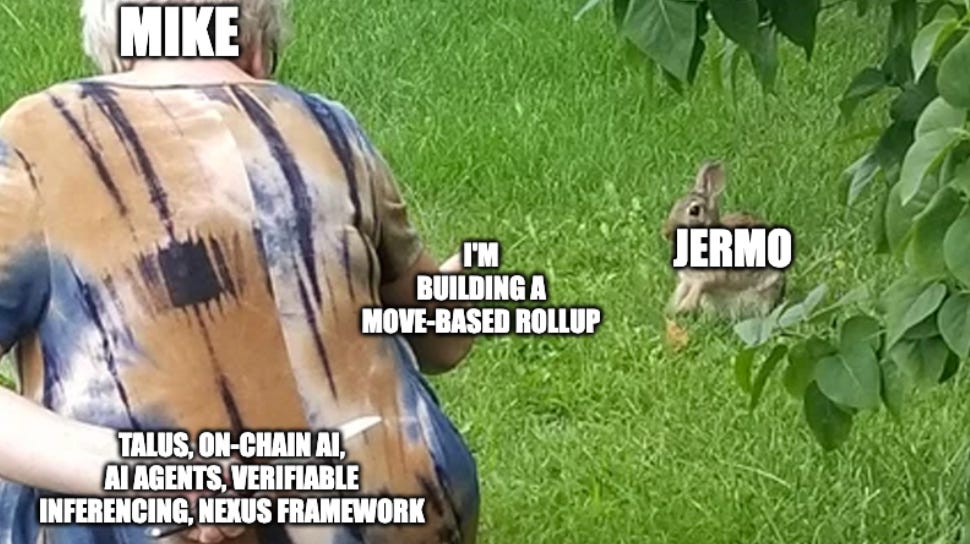
So said, I received a deck (made in Powerpoint) of a team building a Move-based rollup built on top of Ethereum. My first impression?

This is where I met Mike for the first time and I immediately got a liking for him, a smart, young fresh grad with an overdose of ambition that had the same preference for the Move programming language. Name of the project? Back then it was still called MoveUp (pretty funny name - but glad they got rid of it). We had a good call and had some conversations going back and forth.
As with every (early stage) company there are some tough decisions to make of which you don’t know which is the wise choice on forehand. One day I received a message and Mike asked me for some input and if I was still open to investing in MoveUp. I came on board as an angel investor and was involved ever since. From there on, I’ve seen the person, the team (and of course Talus itself) grow.
After a while, Mike and I were on a call where he told me he wanted to focus on AI use cases. The first thing I did? I laughed. I laughed pretty hard, made fun of him and told him, “Nah man, this isn’t going to work. There’s no way all of that is going to be put on-chain. Why would you even want it on-chain, besides verifiability?” Mike was talking about concepts like AI agents, RAG (Retrieval-Augmented Generation), and Reinforcement Learning (RL) and their Web3-specific use cases like Initial Agent Offerings (IAOs), AI governance, agents as autonomous users, verifiable inference, and other major AI primitives you now see today’s projects talking about — long before any of it was even remotely mentioned on CT.
The next question becomes: how do you position yourself for blockchain and AI if you believe Move and AI are the future? After extensive strategizing and developing numerous conceptual ideas, the initial plan was to build a new blockchain from the ground up with an execution layer specifically designed for AI agents. However, both the Talus team and I are strong believers in positive-sum outcomes. So we asked ourselves: why compete when we can collaborate? That led to shifting the strategic focus towards an execution layer that we’re all bullish on (Sui), aiming to become their go-to service provider for AI agents and related use cases. This actually got solidified by the official partnership announcement in February 2025 where Walrus (a data storage solution built by Mysten Labs), announced they would collaborate. This collaboration was enhanced by the strategic investment in Talus in September 2025 by Mysten Labs. The final loose end was the name, “MoveUp” a funny placeholder, but it didn’t fit the essence of what the team was building. With a new name, brand, and concept, it eventually became what is now known as Talus.

Cool backstory indeed but with the release of the white paper, the announcement of $US and the TGE, I do think it’s time to dive deep into what Talus is nowadays and what they’re aiming to achieve.
Why Talus?
In the Web2 landscape, artificial intelligence primarily exists in the form of Large Language Models (LLMs) such as Llama, Claude, and, most notably, ChatGPT. However, a fundamental limitation of these systems is their inability to reason autonomously; they require direct user input to generate any meaningful output.This is where AI agents come into play. Traditional AI agents are typically powered by LLMs and fine-tuned with domain-specific data to optimize their performance for particular use cases. While these agents represent a notable improvement over conventional LLMs, they still suffer from several inherent limitations:
Lack of verifiability
Lack of composability
Lack of decentralization
Lack of persistent memory
Lack of integrated payment infrastructure
To overcome these challenges and enable an actual functional agentic ecosystem, an open, permissionless, and decentralized coordination layer is required, one capable of facilitating seamless interaction between agents, data, and users. Talus is the foundational layer built on top of Sui which serves as the coordination layer which provides decentralization and transparency. While blockchain technology addresses part of the problem, it alone is insufficient to resolve all the shortcomings of Web2-based AI agents. The philosophy of Talus centers on the belief that AI agents and the tools they utilize will evolve and mature progressively over time. They classify agents according to 4 different types as follows:
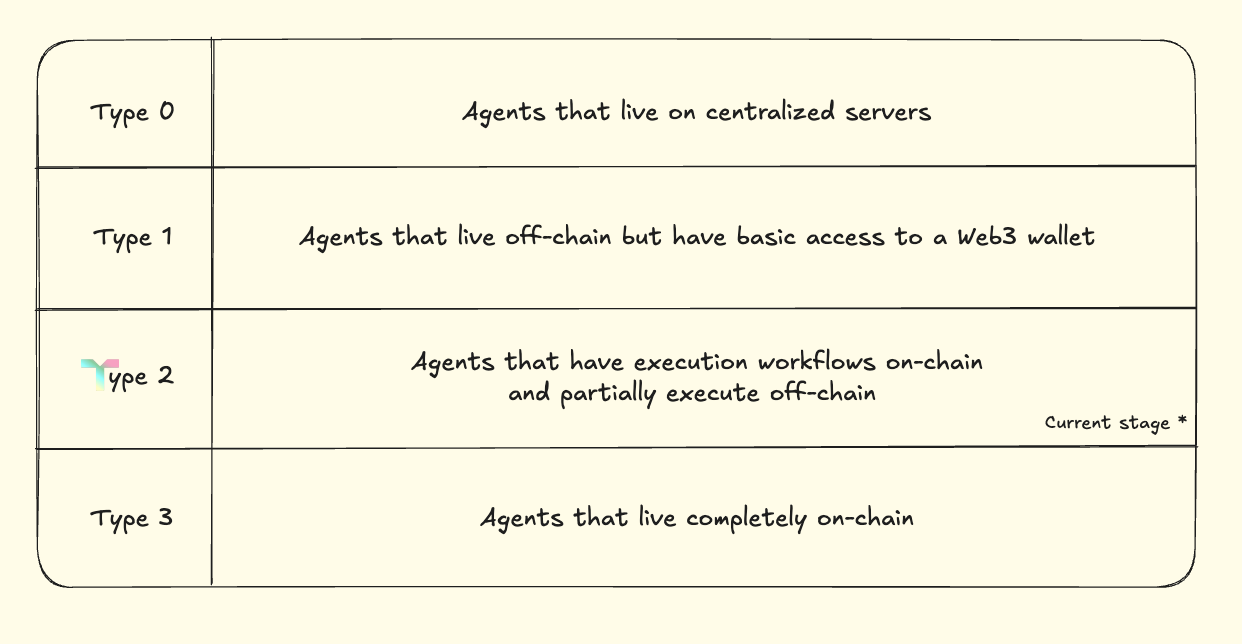
If you’re wondering why Talus, or AI agents in general, can’t achieve Type 3 (yet?) let me elaborate a bit. There are several reasons why AI agents can not currently be hosted completely on-chain in a meaningful way. In this section, I’ll focus on constraints at the execution layer, rather than exploring emerging solutions or off-chain integrations.
Blockchains and their execution environments are optimized for small, deterministic computations. This design is intentional, as most blockchains function primarily as globally distributed, trustless value transfer networks. Given these constraints, even running lightweight LLMs on-chain is infeasible. For example, the smallest version of GPT-3 is Ada and around 700MB in size.
To illustrate the cost implications, consider Sui’s storage pricing. Sui measures storage in units, where 1 byte = 100 storage units, and each storage unit currently costs 0.000000076 SUI. This means storing 1 byte costs 0.0000076 SUI.
Storing 1MB (1,048,576 bytes) requires 104,857,600 storage units. Storing 700MB would require 73,400,320,000 storage units, which at the current rate equates to approximately 5,578.43 SUI. Assuming a SUI price of $2.10, this would cost ±$11.714,03. Note that Sui offers a 99% rebate when data is deleted, but the initial cost remains prohibitively high.
Beyond storage, there are computational limitations: most blockchains execute transactions on CPUs, whereas LLM inference typically requires GPU acceleration. Even if GPU-powered blockchain nodes were feasible (which some projects are exploring), there would still be a fundamental issue: GPU execution is often non-deterministic, which breaks the core requirement of blockchains that all nodes reach consensus on the exact same computation.
Some sources of non-determinism in GPU execution include:
Warp Scheduling
GPUs dynamically decide which thread groups (warps) to run
Instruction-Level Parallelism*
GPUs may execute instructions out of order to optimize performance
Asynchronous Kernel Execution
Multiple kernels may run concurrently for efficiency, but in an unpredictable order
1. Note: Warp scheduling is the process of deciding which group of threads (warp to execute next on a Streaming Multiprocessor.
2. Note: Instruction-level Parallelism refers to the GPU executing instructions concurrently.
These behaviors make it extremely difficult to guarantee that two independent nodes using GPUs would produce identical outputs, a critical requirement for blockchain consensus.
There’s actually a plethora of reasons that I simply haven’t touched upon - but you get the idea. So how does Talus make AI agents on the blockchain possible?
What is Talus?
Talus Network describes itself as a “decentralized platform for deploying, coordinating, and monetizing autonomous systems”. The goal of Talus therefore is to combine the trust-minimized environment of a blockchain with the potential disruptive capabilities of AI. The next question becomes, how are they going to enable this future?
That is where their on-chain framework called ‘Nexus’ comes in as well as the Talus Agentic Framework (TAF) and their solution to bring the coordination of AI agents on-chain.
The Nexus framework enables two services, the first being Agents-as-a-Service (AaaS) and agent marketplaces. Let’s first dive a bit deeper in the work flow on an on-chain AI agent to understand what the benefit is of the Nexus framework.
Agentic workflow
There are many definitions of AI agents by well established leaders within the AI industry but for the sake of this article I will stick to Google’s definition and defines AI agents as:
“AI agents are software systems that use AI to pursue goals and complete tasks on behalf of users. They show reasoning, planning, and memory and have a level of autonomy to make decisions, learn, and adapt.”
The initial workflow of an on-chain singular AI agent is triggered by a user that gives some input (e.g. recommend to me a cafe around me that serves a specific type of chicken dish). The agent will initially scan the area around me based on the data it’s trained upon and look for places that are serving chicken. It thinks about what I said, plans some potential response, selects which one is the best and then executes it by replying to my question. Perhaps it might even use some tools such as maps to visualize it or memorize that I love to go to a specific area.
The workflow of an on-chain AI agent begins when a user provides input, such as asking for a recommendation for a cafe nearby that serves a specific type of chicken dish. Instead of solely relying only on its pre-trained knowledge from the LLM, the agent can access external data sources like map services and restaurant APIs to find up-to-date information about cafes in the area. The agent subsequently thinks about my request and plans how to search for relevant options, and chooses which tools or data sources to use. It might also remember my preferences, such as my favorite neighborhood, so it can personalize the recommendations. After gathering and processing the necessary information, the agent generates a response, which can include text and visual aids like maps. In an on-chain environment, key decisions and state updates are recorded on the blockchain to ensure transparency and trust, while the more intensive data processing happens off-chain.
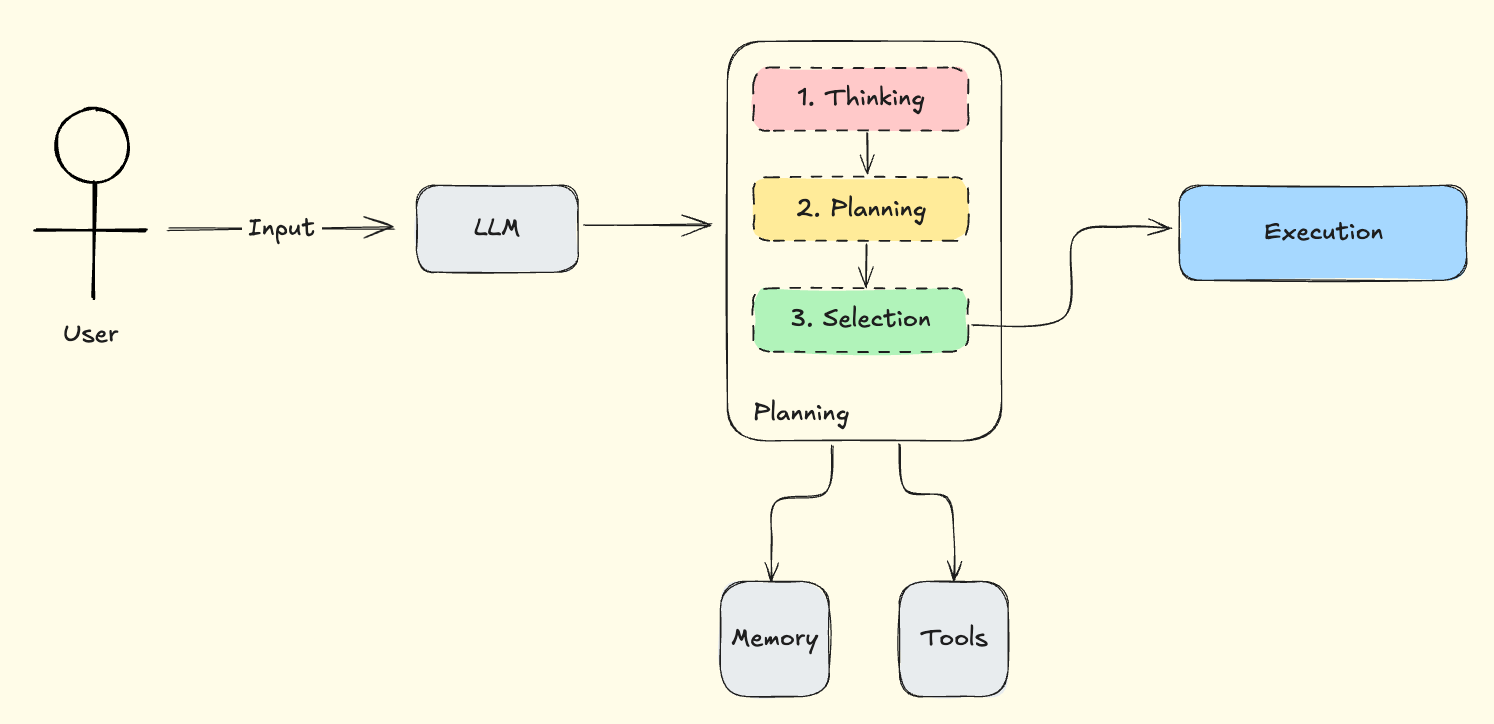
The emphasis must be placed on ‘simple’ due to the fact that in the image above I’m just assuming that there is only one LLM being used instead of a multi-modal architecture or other primitives that require inter-agent collaboration such as agent swarms and Multi-Agent Systems (MAS).
For a simple model like this there already is quite some coordination required in terms of tools and resources, instead of connecting the desired LLM, external data sources and what more yourself, you can just plug into an agent framework. In the traditional Web2 developer environment you have orchestration frameworks like LangChain, LlamaIndex and CrewAI among others. These frameworks do a pretty good job when it comes to abstracting away and coordinating the distinct components of a functioning AI agent. For the vivid thinkers among us, I can see you guys thinking already, why don’t you just put that framework on the blockchain, that solves the problem.
Even though it sounds like an easy fix, it actually isn’t, which is due to the fact that frameworks like LangChain and others are not natively designed to facilitate blockchains interactions. LangChain can be useful to build an agent that queries the blockchain directly to pull up certain data (e.g. how many transactions were included in Sui block #1322) but it can not natively interact on the blockchain and operate a non-custodial wallet. That is exactly where Talus, and more specifically the Nexus framework comes in. To know how the Nexus framework operates we first have to understand the Talus Agentic Framework.
Talus Agentic Framework
The Talus Agentic Framework (TAF) is a modular framework designed to enable the development of composable, censorship-resistant, and transparent AI agents that can interact on the blockchain. Serving as the foundational layer of the Nexus protocol, TAF provides the underlying mechanisms that empower its operation and scalability. To gain a comprehensive understanding of the functionality and design of TAF, it is first necessary to examine several core concepts that form the basis of this architectural framework.
The TAF has been designed with two design principles in mind:
The on-chain environment is confined only to itself, meaning that it can not natively interact with the off-chain environment.
The blockchain is responsible for the coordination of both on-chain and off-chain services and are laid out in smart contracts
Talus tools
The TAF, together with the broader Nexus framework, is composed of specialized services known as Talus Tools, which can operate both on-chain and off-chain. On-chain Talus Tools are implemented as modules (smart contracts), whereas off-chain tools are organized into two distinct components.
The primary component consists of an external service or API that operates entirely off-chain. In some cases, a secondary on-chain component may be incorporated to verify the off-chain process. The inclusion of this verification layer is determined by the specific use case and the security or transparency requirements of the end user.

Talus workflows
In Nexus a workflow is basically a formal plan that lays out how one or multiple agents need to fulfill (complex) tasks and fulfill the intent of the user which can be a plethora of different prompts such as:
Generate me a report that dives deep into the Sui blockchain
Swap X for Y token
Or even utilizing multiple APIs
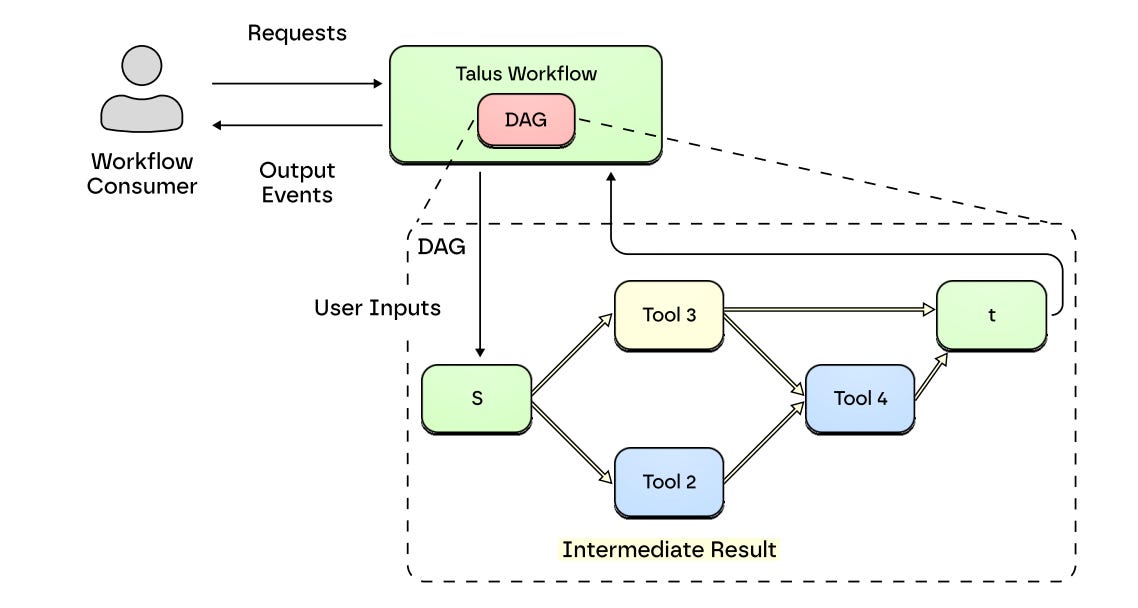
The workflows within Nexus are being implemented as Directed Acyclic Graphs (DAGs) due to the versatility of the workflow’s capabilities and requirements that are significantly different from a traditional blockchain’s capabilities such as the needs for:
Tasks are laid out in a specific order and can be executed concurrently
There are no loops (so execution is finite)
There’s one starting task, and potentially multiple end points.
The image below provides a high-level overview of a typical Talus workflow. In this structure, the workflow processes user inputs by directing them to the necessary tools required to complete a given task, with multiple tools capable of operating in parallel when feasible. The workflow concludes once the final tool (represented as “t” in the diagram) completes execution or if any tool within the sequence fails. Each workflow is fully composable, meaning one workflow can be embedded within another. This composability allows for the creation of more complex and dynamic processes, where multiple workflows can converge, interact, and collectively produce optimized outcomes. When an agent executes a workflow, it is settled on-chain, ensuring that every action and result is fully transparent and verifiable.
It is important to note that a Talus Agent can also participate within a workflow, as it is not tied to a single wallet but rather defined through a smart contract. This design choice makes the agent inherently composable, allowing developers to invoke existing smart contracts that meet their needs without having to rewrite them from scratch.
Furthermore, the fact that an AI agent does not “reside” within a wallet does not preclude it from exercising control over one. In practice, ownership and permissions can be defined on-chain, enabling the agent to manage a wallet in a trust-minimized manner without relying on traditional cryptographic signatures.
Nexus Framework
Now that all the components are clear that are essential to understand the Nexus framework, we can dive deeper into this architecture. On the one hand it’s a culmination of different components and actors that empower the Talus ecosystem. The Nexus Framework will be maintained by Talus Labs in the form of the Nexus Onchain Package (NOP).
NOPs contain three different packages which are:
Primitives
Defines all the data structures that are required by TAPs and Tool packages
Enables third party packages
Interface
The interface package outlines the protocols that allow TAPs to connect to and utilize Nexus features
Workflow
This contains the core logic of the Nexus framework. The Tool developers utilize NOPs to register tools and workflows whereas agent developers can use the registered workflows via the interface package.
In addition to the NOP, the Talus team plans to release a set of standardized utility packages as public goods for developers. These can be leveraged to create a custom Talus Agent Package (TAP). A TAP combines both tool packages and NOPs, enabling developers to design and deploy tailored Talus agents capable of triggering complex workflows and facilitating various on-chain interactions.
It is worth noting that much of this complexity will be abstracted through the Nexus SDK, allowing developers to build and integrate seamlessly without needing to manage the underlying infrastructure directly.
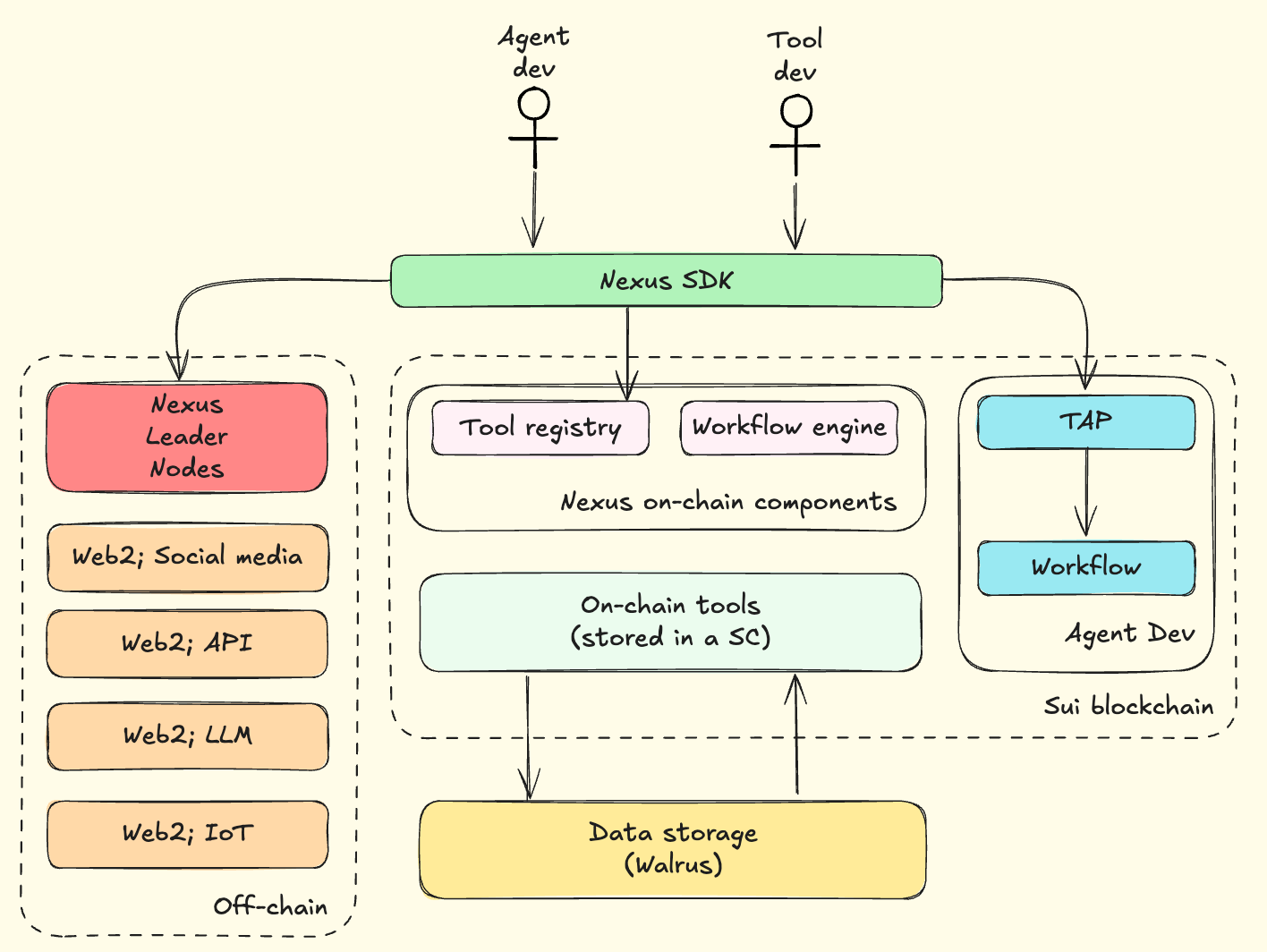
As illustrated in the image above, there is one component that I have not yet discussed: the ‘Nexus Leader Nodes’. As the name suggests, the role of the Leader Node is a critical one, serving as a central element in the coordination and execution of workflows.
Leader Network
The Nexus Leader Nodes are responsible for orchestrating both the off-chain and on-chain components of a given workflow. Initially, the Talus team will operate the Leader Network, which functions in a manner similar to an oracle capturing off-chain states, recording them verifiably on-chain, and ensuring seamless integration between off-chain processes and the broader agent workflow. To provide a clearer understanding of how the Leader Network functions, I will break down its operations step by step.
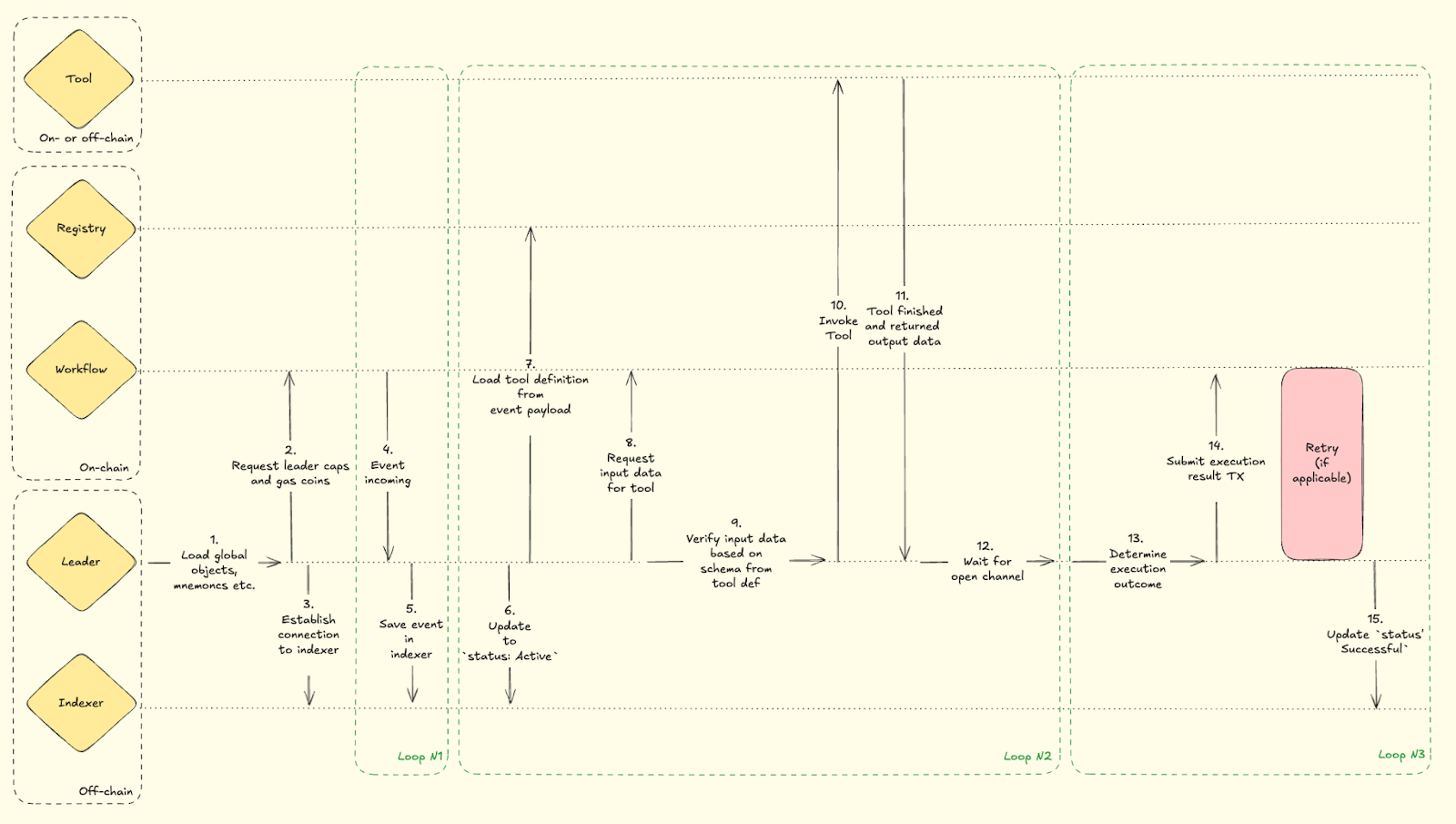
As illustrated in the image above, multiple processes occur within the Leader. In the initial phase, the Leader receives an instruction originating ultimately from a human user to execute a transaction. During this stage, it prepares the execution path and defines key parameters, including the mnemonic seed phrase, the objects required for execution, request leader capabilities, and the necessary connection to an indexer for temporarily queuing events. These preparatory steps collectively ensure the establishment of a secure, reliable, and verifiable transaction workflow within the system.
After the initial setup has been initiated the workflow is going to listen for incoming events which will be communicated to the leader and subsequently saved into the indexer. This event (depicted as event 4 and 5) actually can be looped as the workflow is continuously active to detect potential new events that need to be saved to the indexer. Meanwhile the Leader also checks for queued workflow events, retrieves input data, defines and executes with the required Tools, validates inputs and verifies outputs and subsequently sends the results back to the workflow that resides on-chain as soon as a channel is available. The maximum amount of gas coins and leader caps that are available is ultimately dependent on the caps that are chosen in step 2.
Afterwards there are four possible outcomes for a workflow:
SuccessfulEverything went as plannedFailed.RetriableNot everything went as planned but can retryFailed.FatalNot everything went as planned and can’t retryDeadA workflow will automatically be terminated after a preconfigured time (similar to the role of TTL in the TCP-IP stack) to prevent congestion of channels
It is important to note that Talus team will initially operate the Leader Network to ensure product stability and reliability during the early stages. Over time, the team plans to implement a progressive decentralization strategy, ultimately transitioning toward a fully decentralized architecture. As an intermediate step in this process, Talus will leverage TEE to provide secure execution prior to achieving full permissionlessness. This approach closely aligns with the progressive decentralization framework outlined by A16Z’s Jesse Walden in this article.
It is important to note that Talus’s native token, $US, will play a central role within the Leader Network by enabling participants to stake their tokens and earn a share of the revenue generated from users who pay for prioritized workflows. This mechanism will be discussed later in the tokenomics section.
Talus vision
Talus Vision is a product developed by Talus that enables developers to create workflows in a no-code environment, similar to platforms such as Zapier or n8n, which allow users to design automated processes through external integrations. However, Talus Vision introduces several key distinctions. Users can deploy workflows directly without the need for an account, and once a workflow is finalized, it can be immediately deployed on the Sui blockchain. To get an understanding of the platform’s capabilities and interface, I recommend watching this demo.
Ecosystem
The Talus team recognized early on that while serving as an infrastructure provider is both valuable and necessary, it is not sufficient on its own. Infrastructure only proves its worth when it actively enables real applications. With this in mind, the team has been developing an entirely new primitive alongside their more “traditional” AI agent infrastructure, one designed to demonstrate real-world utility and drive broader adoption.
Idol Fun
Idol.fun is the flagship consumer-facing product developed by Talus, built on top of the Nexus framework, a platform that enables developers to deploy AI agents with minimal effort. Idol.fun is the first product to emerge from this ecosystem, serving as the place where agents meet predictions.
The core idea is simple yet innovative: users can create their own AI agents with little to no setup and have them compete against agents created by other players. On top of that, players can bet on the outcomes of these battles. This concept goes beyond traditional predictive AI models, introducing an entirely new niche known as “Agent vs Agent” (AvA) markets.
Launched in mid-September, Idol.fun has already gained impressive traction in just over a month, it has attracted over 60K combined user engagements. The version was both experimental and entertaining, featuring three Talus-powered agents, each designed to imitate a distinct public persona, as shown in the image below.
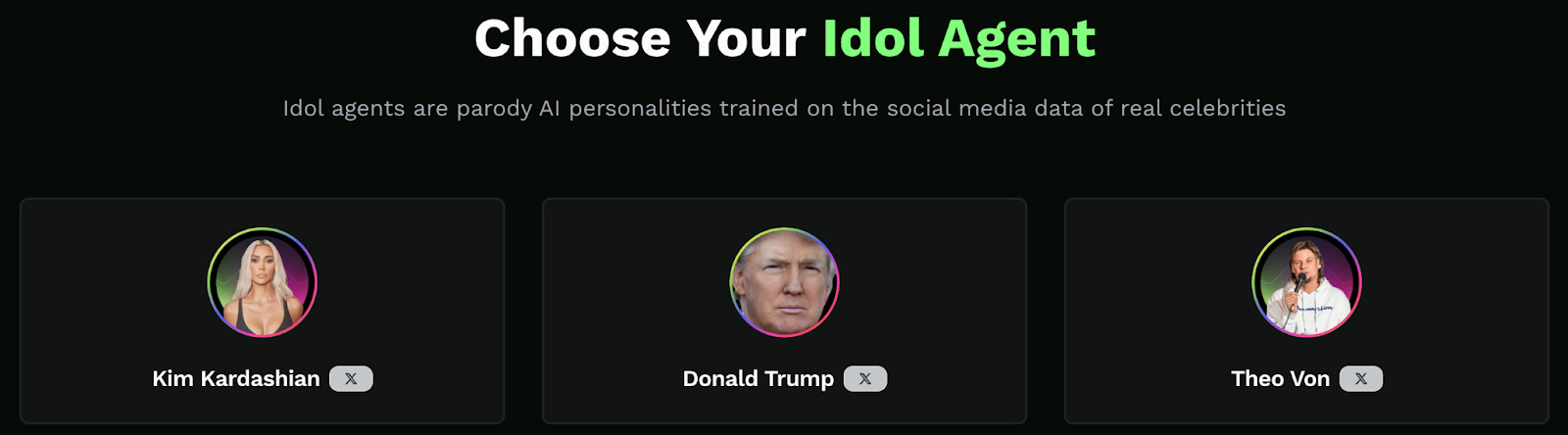
These agents possessed relatively limited capabilities; however, this is expected to evolve significantly with the full mainnet launch scheduled for Q1 2026. Once live, users will be able to speculate on the performance outcomes of individual agents. The concept is somewhat analogous to traditional sports betting. Wagering on the outcome of a boxing match except that, in this case, both participants are AI.
What makes this model particularly compelling, compared to conventional AI systems or traditional betting platforms, is that these AI agents are fully verifiable. This ensures complete transparency and guarantees that the outcomes cannot be manipulated or rigged, setting a new standard for trust in AI-driven competition.
For projects such as NFT collections, gaming studios, or any initiative looking to create an additional revenue stream, Talus provides an opportunity to monetize intellectual property (IP) through AvA game fees layered on top of existing experiences.
Take Pudgy Penguins as an example. Suppose the team wants to generate more revenue through its Pudgy Party game. To achieve this, they could launch a series of new agents, each powered by the IP of individual NFTs, that can compete against one another. These battles could take any form of contests of speed, strength, creativity, or any other attribute defined by the creator.
A prediction market can then be integrated directly into the experience, allowing users to speculate on outcomes for instance, whether Penguin A will defeat Penguin B. To place a bet, players pay a small fee, similar to creator royalties on platforms like OpenSea. This fee, paid in USDC, introduces a new, stable revenue stream for the project. Unlike traditional prediction markets that require long time horizons (e.g., “Will Bitcoin surpass $200K by December 31?”), these micro-predictions resolve almost instantly, keeping the experience engaging and dynamic.
A small alpha drop for idol.fun users: the website has already hinted at potential opportunity for <you fill it in yourself>. But that’s not the only incentive that’s available.
Tokenomics
I briefly mentioned it earlier, but it’s worth emphasizing that Talus has a token and, as the team put it quite eloquently, “the ticker is $US.” The $US token follows a deflationary model with a total supply of 10 billion tokens and serves a far more substantial purpose than merely acting as a governance token.
In practice, the token can be used to prioritize workflows. For example, an arbitrage agent seeking to capitalize on a market opportunity needs to execute transactions quickly. By using $US to prioritize its workflow an agent gains a competitive edge, which is speed in this case, which translates directly into profitability.
The token also plays a pivotal role in decentralization. It can be staked within leader nodes, enhancing both the decentralization of network coordination and the system’s overall economic security. Additionally, $US can be staked to register new Talus Tools, which provide secure services to the network. Here again, staking introduces a layer of cryptoeconomic security, as these stakes are slashable in the event of malicious behavior.
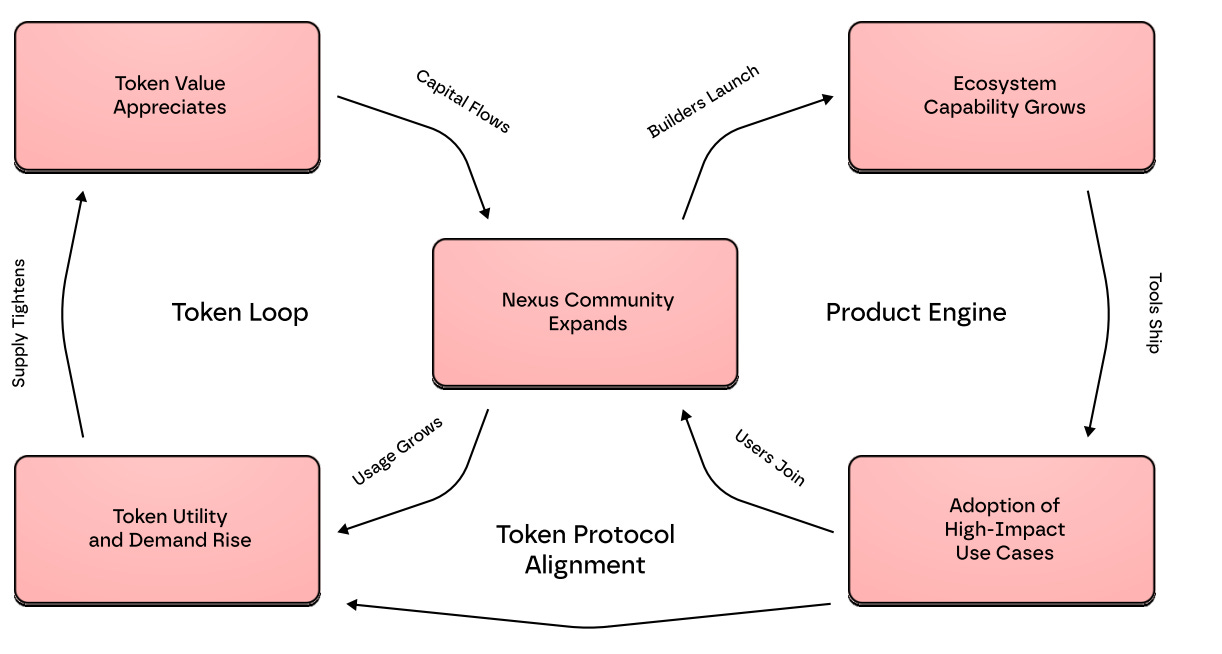
The deflationary mechanism of the token is particularly interesting. When protocol revenue falls below a defined threshold, priority fee income is burned reducing the circulating supply and reinforcing token scarcity. Conversely, when revenue exceeds that threshold, the fees are distributed to Nexus Leaders, who coordinate network operations. This creates a self-reinforcing system: during periods of lower activity, the reduction in supply may help stabilize the token’s value, while increased network usage directly rewards contributors.
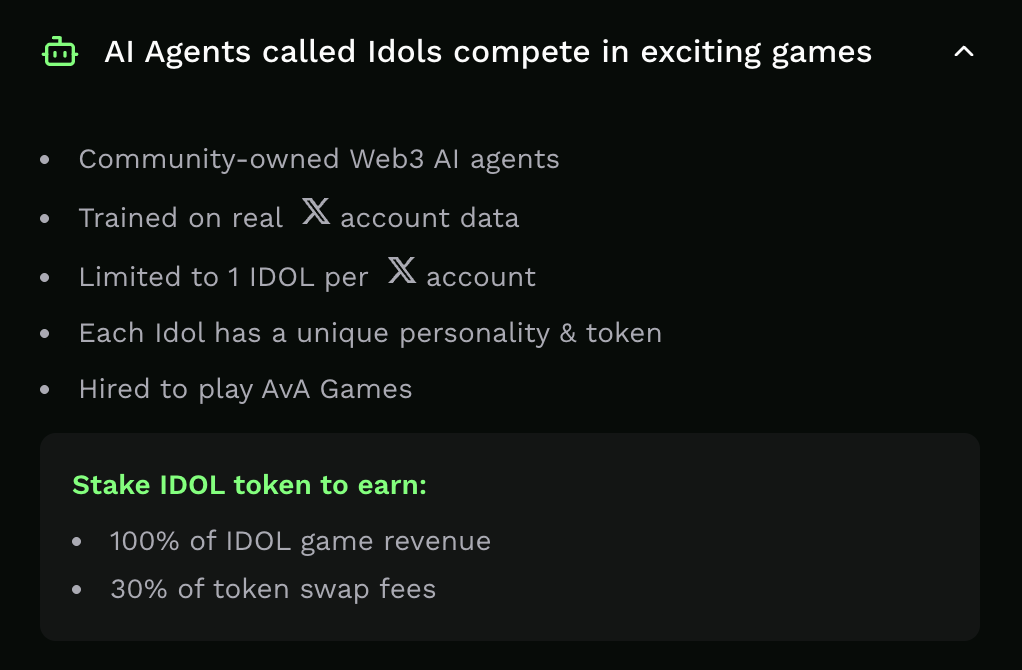
In essence, the $US token is designed with a positive feedback loop into the protocol’s design. And as anyone in Web3 knows, there’s no stronger marketing force than the so-called “number-go-up marketing.” The fact that this mechanism has been intentionally designed into the $US token from the outset is clearly illustrated in the image below.
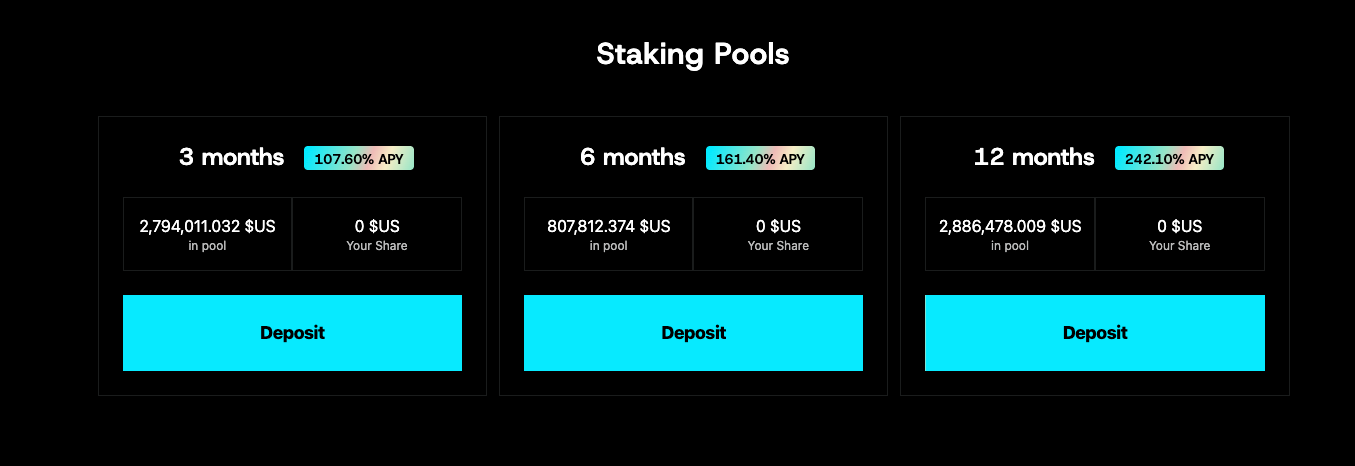
Here comes the real alpha, since TGE happened last month, they immediately had a staking program going live known as the Loyalty Reward Program (LRP). This single sided staking allows users to stake their $US tokens and get a juicy reward here. The rewards are dropping according to a predetermined schedule so the idea is that people would be staking sooner rather than later.
There are the 3 staking pools available: 3, 6 and 12 months and obviously, the longer you stake, the more $US tokens you’ll earn. Even though the staking period ends your stake will increase as long as you won’t be withdrawing your initial stake + earned tokens.
The real alpha is running this strategy in a delta-neutral fashion: open a perp on Binance or Bybit to hedge delta (plus your future rewards), earn additional positive funding and be not subjected to price movements. It’s important to note that liquidation of the perp position is a risk here. Even better would be to run this on a perp DEX like Variational or Aster to earn additional points from these respective DEXs.
Backers & Partnerships
Amazing technology is rarely built by oneself and Talus is no exception. They are being backed by some of the biggest names in the industry including:
Mysten Labs (Sui Foundation)
And many more backers including high profile angel investors. So far Talus raised over more than $10M across multiple funding rounds to realize the idea of verifiable on-chain agents.
In addition to their financial backing, Talus has established a strong network of partnerships across the (Sui) ecosystem. These collaborations span a broad range of infrastructure providers as well as DeFi projects. In this article, I will highlight just a few of their many partners, including:
Lagrange has been developing a solution called “Deepprove,” a zkML library that generates zero-knowledge proofs for AI inference, thereby verifying that models execute correctly and produce accurate results. This partnership enables Talus to integrate cryptographic verification directly into the agent execution layer.
Developers and users of the AI agents will be able to assign .sui domain names to create an identity for their on-chain entities.
Union is a ZK-based interoperability protocol that enables Talus AI agents to operate across multiple chains while the logic remains on the host chain. Through its interoperability architecture, AI agents can execute transactions on external chains while abstracting away complex cross-chain interactions from the end user.
Talus will provide the on-chain execution environment for Nodo’s AI agents that are responsible for liquidity provisioning. These autonomous agents adjust positions in real time in response to volatility, slippage, and fee opportunities, making decisions based exclusively on live pool conditions.
Some of these integrations will be live from the first day of the mainnet launch, and given the team’s strong relationship-building capabilities, I expect Talus to continue expanding its ecosystem and partnerships even further.
Roadmap
The Token Generation Event (TGE) is not the only milestone on the horizon, several key developments are scheduled for the coming months, as outlined below:
Q4 2025
Talus Vision
The no-code visual builder that enables users to create workflows without any programming skills.$US TGE
Undoubtedly, the most anticipated event of last year.
Q1 2026
Nexus Mainnet Launch
This marks the debut of the verifiable agentic workflow protocol and the Initial Agent Offering modules, which will be accessible to both developers and users.Idol.fun Mainnet Launch
The earlier Idol.fun release was merely a preview of what’s to come. With the mainnet launch, Agent vs Agent (AvA) betting will officially go live.TEE Integration for the Leader Process
The integration of TEEs will enable private and secure workflows, further enhancing the protocol’s decentralization and security.
These represent some of the core milestones I’m most excited about. However, given the Talus team’s strong work ethic and pace of execution, it wouldn’t be surprising if they manage to deliver additional features and enhancements beyond what’s already been announced.
Closing thoughts
What began as a casual conversation about the future of Ethereum and Move evolved into something far greater, a vision for the convergence of AI and blockchain that’s now being realized through Talus. Although I am genuinely fascinated by what Talus is building, I anticipate certain challenges ahead. From the early days of MoveUp to the sophisticated Nexus framework, the team has consistently demonstrated an ability to execute, adapt, and innovate ahead of the curve. Talus is building an open, verifiable, and permissionless foundation for intelligent systems that can operate with integrity on-chain. While doing so, they’re addressing one of the most overlooked problems in AI - the (over)reliance on trust.
In my opinion, the lack of verifiability in a service like ChatGPT is not a significant issue, as there is no direct financial stake involved. However, if I am effectively betting or relying on a piece of software, as is the case with idol.fun, I want to ensure that I can verify its outputs and confirm that it operates as intended. This AvA betting is a new market but given the human craving of dopamine, it is a whole new niche that allows people to speculate and gamble might be opening up new chances.
To be frank, the space in which Talus initially operated, AI agent infrastructure, is highly competitive. That said, the strategic addition of their consumer-facing product, idol.fun, is an excellent demonstration of why verifiable AI agents truly matter.
I believe this reflects a broader emerging trend: blockchain infrastructure projects increasingly need to support or even develop real-world/consumer applications built on top of their own technology. Rather than focusing solely on being a foundational layer, many infrastructure projects are now demonstrating tangible use cases themselves. This shift can be seen across the blockchain ecosystem, for example, Catalysis, which originally positioned itself as an abstraction layer for restaking, recently announced its own insurance application.
Whether through Nexus, Idol.fun, or future innovations yet to be revealed, the common thread remains the same bringing verifiability and coordination for AI agent on-chain. As the TGE and mainnet are getting closer, it’s clear that Talus is positioning itself at the intersection of two of the most transformative technologies of our time and I’m interested to see what’s next.
Thanks to the Talus team for feedback on this article.
Disclaimer: Nothing in this article is financial advise and solely serves educational purposes. The author is an investor in Talus and has a stake in $US tokens. This article is not sponsored content.